sunscreen
5 min read
How to Use Sunscreen on the Face
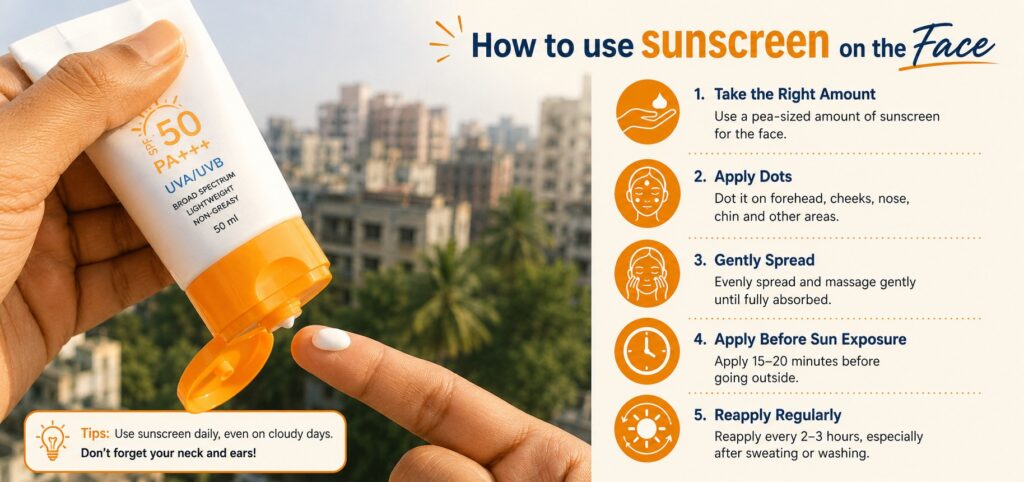
To use sunscreen on your face, apply a two-finger amount of broad-spectrum SPF 30+ after your moisturizer, at least 15 minutes before sun exposure. Reapply every two hours outdoors. Whether it's sunny, cloudy, or cold, daily sunscreen protects your face from premature aging, sunburn, and skin cancer.
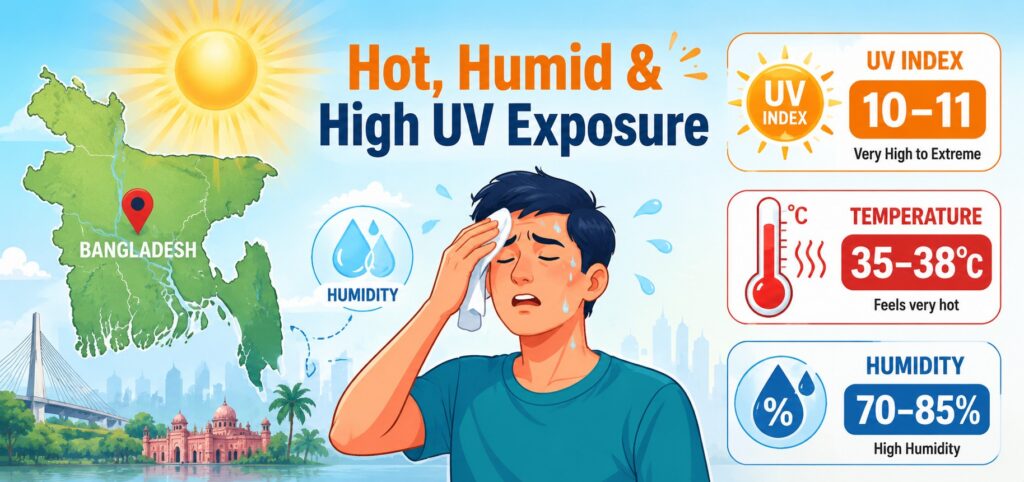
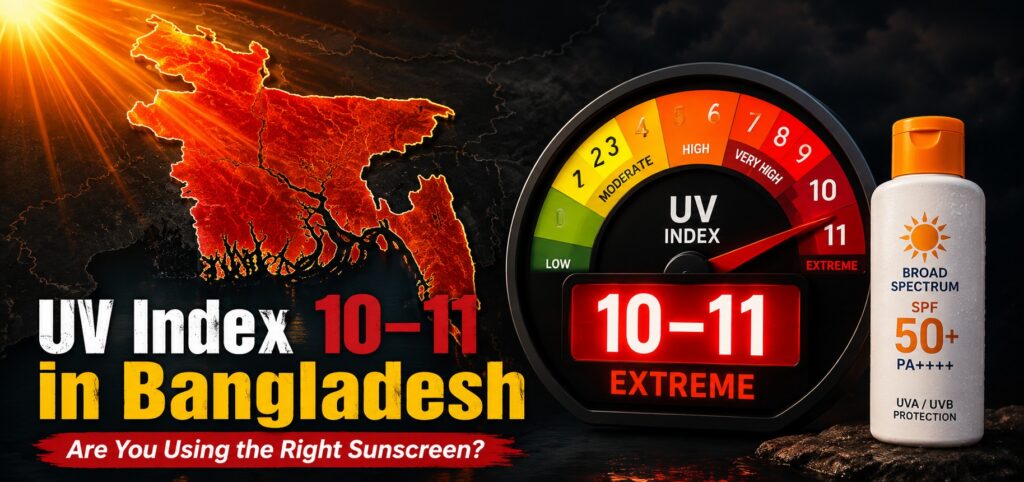
Bangladesh records one of the highest UV index levels in South Asia. Dhaka's UV index reaches extreme levels from March through October. For a full breakdown of top-rated facial sunscreens available locally. Daily SPF application takes under five minutes and costs from BDT 150 per month.
How Sunscreen Protects Your Skin from UV Rays
Sunscreen blocks UVA and UVB radiation using two filter types. Chemical filters absorb UV rays and convert them into heat. Physical sunscreen sits on the skin surface and reflects UV rays away from your skin. Zinc oxide and titanium dioxide make these mineral options for acne-prone skin the safest pick for reactive or easily irritated faces.
UV radiation from the sun comes in two main types: UVA and UVB. UVA rays penetrate deep into the inner skin layers. UVB rays burn the outer surface of exposed skin. Chemical sunscreens absorb UV rays and convert them into heat energy. Physical sunscreens reflect UV rays directly away from the skin surface. SPF measures a product's ability to block UVB radiation from the sun. SPF 30 blocks approximately 97% of incoming UVB rays.
What are the key benefits of applying sunscreen on your face every day?
| Benefits | Outcome |
|---|---|
| Skin cancer prevention | Blocks UVB rays that trigger cancerous DNA mutations in skin cells. |
| Dark spot prevention | Stops UV-induced melanin overproduction that causes hyperpigmentation. |
| Anti aging protection | Preserves collagen and elastin to slow fine line formation on the face. |
| Even skin tone | Prevents uneven UV tanning across different facial zones. |
Sunscreen Types Available in Bangladesh (Chemical vs. Physical)
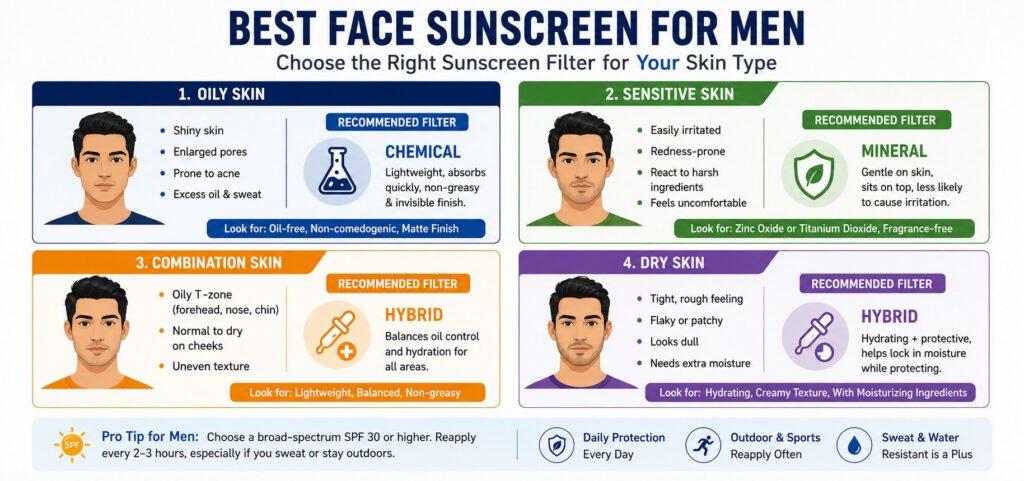
Two primary sunscreen categories are available in the Bangladesh market. Chemical sunscreen absorbs into skin and works best for daily humid-climate use. Physical sunscreen sits on the surface and suits sensitive or acne-prone skin. Hybrid sunscreen combines both filters for broad protection with a lighter finish.
Chemical Sunscreen
- Absorbs directly into the skin and neutralizes incoming UV rays.
- Feels lightweight on the face during and after application.
- Suits medium to deep skin tones without leaving a white cast.
- Best for: Daily urban use in humid and high-UV climates.
- Key ingredients: oxybenzone, avobenzone, octinoxate, homosalate.
Physical Sunscreen (Mineral Sunscreen)
- Sits on the skin surface and reflects UV rays outside.
- Frequently leaves a visible white cast on medium to dark skin tones.
- Best for: sensitive skin, acne-prone skin, and infants under six months.
- Key ingredients: zinc oxide, titanium dioxide.
Hybrid Sunscreen
- Combines both chemical and physical UV filters in one formula.
- Delivers broad-spectrum protection with a lighter skin finish.
- Best for: Users who want mineral protection without the white cast.
Understanding Sunscreen Label Terms
PA Rating (Protection Grade of UVA)
- The PA rating system measures UVA protection strength on Asian sunscreen products.
- PA+ provides some UVA protection for low-UV indoor environments.
- PA+++ provides high UVA protection for outdoor use in Bangladesh's climate.
- PA++++ provides the maximum UVA protection for extreme UV conditions.
- Always select PA+++ or PA++++ for daily facial use in Bangladesh. High PA-rated Korean formulas are typically the strongest match for this standard
Key Active Ingredients to Know
- Zinc oxide: Physical UV filter, reflects both UVA and UVB rays, safe for sensitive skin.
- Titanium dioxide: Physical UV filter, reflects UVB rays, mild UVA protection.
- Avobenzone: Chemical UVA filter, provides deep UVA ray protection on skin.
- Oxybenzone: Chemical UVB filter, activates fast, suits everyday facial sunscreen.
- Octinoxate: Chemical UVB filter, lightweight texture, used in most gel sunscreens.
- Homosalate: Chemical UVB booster, increases overall SPF strength in formula.
How to Use Sunscreen on the Face: Step-by-Step Instructions
Cleanse the face, apply sunscreen using the two-finger rule, then dot it across five key zones. Blend upward with fingertips and wait 15 to 20 minutes before sun exposure. Reapply every two hours during outdoor activity.
Step 1-Cleanse Your Face Thoroughly
Begin the process with a completely clean face. Select a gentle face wash suited to your specific skin type. Wet your face with lukewarm water before dispensing the cleanser. Massage the cleanser into the skin in small circular motions for 30 seconds. Rinse the face completely under clean running water. Pat the face dry using a soft, clean cotton towel. Avoid rubbing the skin harshly after washing to prevent irritation.
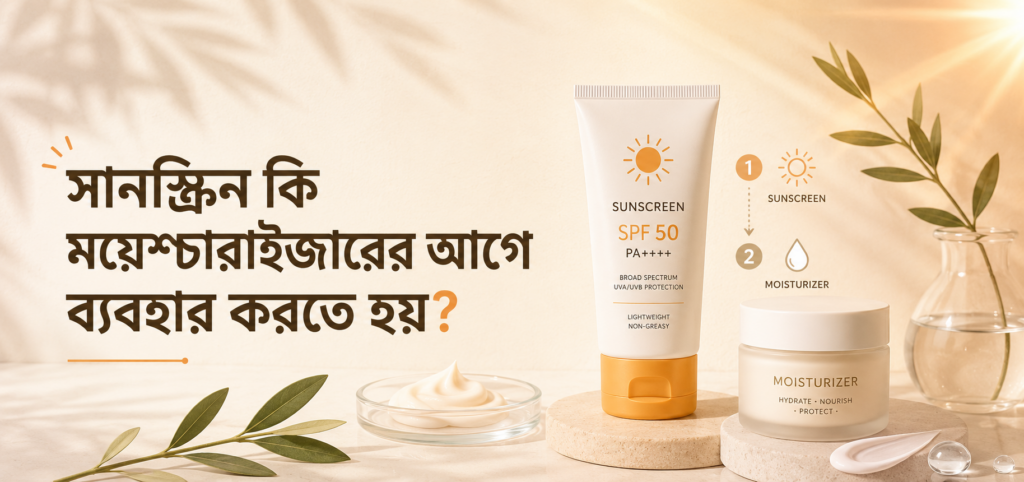
Step 2-Apply Moisturizer First (If Needed)
Apply a lightweight moisturizer immediately after cleansing for dry skin types or check hydrating formulas for dry skin that combine SPF with moisture. Allow 60 seconds for the moisturizer to absorb fully before the next step. Skip moisturizer if your chosen sunscreen already contains built-in hydrating ingredients. Oily skin types in Bangladesh's humid climate can typically omit this step and lightweight formulas for oily skin absorb faster without added shine. A pea-sized amount of moisturizer is sufficient to cover the full face.
Step 3-Measure the Right Amount of Sunscreen
Use the two-finger rule to determine the correct sunscreen quantity. Squeeze a line of sunscreen along the full length of your index finger. Repeat the same line along the full length of your middle finger. This combined amount covers the face and neck with adequate SPF protection. Applying less product than this measurement significantly reduces UV protection on the skin. Never reduce the amount used to extend the lifespan of the product.
Step 4-Dot Sunscreen Across Key Face Zones
Dispense the measured amount of sunscreen onto the tips of your fingers. One small dot of sunscreen on the center of the forehead. Place one dot on the left cheek. One dot on the right cheek. One dot directly on the nose. Place one final dot on the chin area. This five-dot method prepares even product distribution across all facial zones.
Step 5-Spread Sunscreen Equally Across the Face
Use the flat pads of your fingertips to spread the sunscreen dots. Blend the product using gentle upward strokes across each facial zone. Cover the forehead from the hairline down to the eyebrow line completely. Blend carefully around the eye socket area without touching the eyelid skin directly. Extend the sunscreen coverage to the ears and along the jawline. Leave no uncovered patches of skin anywhere on the face. Give extra attention to the nose, as it receives the highest concentrated UV exposure.
Step 6-Allow Sunscreen to Absorb Before Going Outside
Wait a full 15 to 20 minutes after applying sunscreen before stepping outside. Chemical sunscreens require this absorption window to activate their UV-filtering properties. Physical sunscreens provide UV protection immediately upon complete application. Set a phone timer to track the required absorption time accurately. Use this waiting period to complete other steps in your morning routine.
Step 7-Reapply Sunscreen Every Two Hours
Sunscreen protection decreases measurably after two consecutive hours of sun exposure. Reapply sunscreen every two hours during any sustained outdoor activity. Sweating and water contact break down sunscreen protection at a faster rate. Carry a travel-sized sunscreen tube in your bag for midday reapplication. Sunscreen sprays or powder formulas work well for top-up applications over makeup.
How to Apply Sunscreen Under Makeup
Apply sunscreen as the final skincare step, wait 15 minutes, then layer primer and foundation. Never mix sunscreen directly into makeup products. Gel and fluid formulas layer best under makeup in humid weather. Step-by-Step Method for Applying Sunscreen Before Foundation
Step 1: Apply sunscreen as the final skincare step before any makeup product.
Step 2: Wait 15 full minutes for the sunscreen layer to fully absorb into the skin.
Step 3: Apply makeup primer directly on top of the fully absorbed sunscreen layer.
Step 4: Allow the primer to set completely before applying foundation on top.
Step 5: Apply foundation only after the primer layer has fully set on the skin.
Step 6: Never mix sunscreen directly into foundation or primer before applying.
Step 7: Never mix sunscreen with other products. Mixing reduces the rated SPF value significantly.
Best Sunscreen Textures for Makeup Wearers in Bangladesh
Gel-based sunscreens perform best under makeup in Bangladesh's humid weather conditions. They absorb rapidly and leave a matte, non-greasy base on the skin.
Fluid or serum-type sunscreens also layer smoothly beneath liquid foundation products. Cream sunscreens may feel excessively heavy under full-coverage foundation formulas.
Tinted sunscreens serve as a standalone light-coverage alternative to traditional foundation. Select sunscreens marked "non-comedogenic" on the label to prevent clogged pores under makeup.
Alternative Methods for Applying Sunscreen on the Face
Sunscreen Stick Method
A sunscreen stick is a solid, compact-format sunscreen applicator. Swipe the stick directly across the forehead, both cheeks, nose, and chin. Blend the deposited product into the skin using clean fingertips immediately after swiping. Sticks are a practical format for travel and midday reapplication in Bangladesh's climate. They eliminate the risk of product spills inside bags during daily commutes. Select sunscreen sticks with SPF 30 or higher for adequate UV protection.
Sunscreen Spray Method
Sunscreen sprays deliver product across the skin as a fine, even mist. Hold the spray nozzle approximately 15 centimeters from the face during application. Move the bottle in a slow, sweeping motion to cover the full facial area. Rub the mist into the skin firmly using fingertips immediately after spraying. Keep the mouth closed to avoid inhaling any product mist during use. Spray sunscreens require thorough hand-blending to achieve complete and even coverage.
Sunscreen Powder Method
Sunscreen powder is a dry-format product designed for reapplication over existing makeup. Use the brush included with the product to sweep powder across the entire face. Focus the application on the nose, forehead, and cheeks during each powder top-up. Sunscreen powder does not replace a full liquid or cream sunscreen base application. Use this format exclusively as a midday top-up method over a primary sunscreen layer.
Common Mistakes to Avoid When Applying Sunscreen on the Face
The most common mistake is applying too little product below the two-finger rule amount. Other errors include skipping cloudy-day protection, missing the hairline and ears, and applying sunscreen over makeup instead of under it.
Insufficient Product Amount
- Applying too little sunscreen is the most common protection error.
- The correct amount for the face follows the two-finger rule.
- Under-application directly reduces the rated SPF protection level.
Skipping Sunscreen on Cloudy Days
- Using sunscreen only on sunny days leaves facial skin unprotected.
- Bangladesh's UV index stays critically high on overcast days.
- UV rays penetrate through cloud cover at up to 80% strength.
Missing the Hairline and Ear Areas
- Skipping the hairline creates a fully exposed, unprotected skin zone.
- The ears receive direct UV radiation during all outdoor activities.
- Incomplete facial coverage leads to uneven tanning and sun damage.
Applying Sunscreen Over Makeup
- Applying sunscreen over existing makeup blocks proper skin absorption.
- Sunscreen requires direct contact with clean skin to function correctly.
- The correct sequence places sunscreen before primer and foundation layers.
Rubbing Product Too Quickly
- Rubbing sunscreen too fast disrupts even product distribution on the skin.
- Uneven blending creates high-coverage and zero-coverage patches on the face.
- Gentle upward strokes ensure complete and uniform sunscreen coverage.
Skipping the 15-Minute Absorption Wait
- Chemical sunscreens require 15 to 20 minutes to activate on the skin.
- Going outside immediately after application reduces UV filter effectiveness.
- Physical sunscreens provide immediate protection without absorption wait.
Using Expired Sunscreen
- Expired sunscreen provides significantly reduced UV protection on skin.
- Active UV-filtering ingredients break down past the printed expiry date.
- Always check the expiry date on every sunscreen tube before application.
Skipping Reapplication After Sweat or Water Exposure
- Sunscreen protection breaks down after two hours of continuous sun exposure.
- Sweating removes sunscreen coating from facial skin at an accelerated rate.
- Water exposure washes away non-water-resistant sunscreen formulas completely.
- Reapply sunscreen every two hours during outdoor activity in Bangladesh.
Safety Precautions When Using Sunscreen on Face
- Patch test on the inner wrist and wait 24 hours before full facial use.
- Stop use immediately if redness, itching, or swelling appears on the skin.
- Avoid direct contact with the eyes and mouth during application.
- Store products below 30°C away from direct heat and sunlight.
- Discard sunscreen with a changed color, smell, or separated texture.
- Use a non-comedogenic formula on acne or eczema-affected facial skin.
- Use only zinc oxide physical sunscreen on infants under six months old.See gentle SPF options for kids for the full range of child-safe formulas.
Critical Factors That Affect Sunscreen Effectiveness on Face
- SPF number on the label determines the exact level of UVB ray protection.
- A broad-spectrum label confirms protection against both UVA and UVB rays.
- The total quantity of sunscreen applied determines actual SPF protection on skin.
- Applying less than the two-finger rule amount reduces effective SPF significantly.
- Chemical sunscreens require 15 to 20 minutes to activate before sun exposure.
- Physical sunscreens provide immediate UV protection upon full application.
- Individual skin type directly influences sunscreen absorption speed on the face.
- Oily skin in Bangladesh's humid climate can reduce sunscreen coverage faster than dry skin.
- High humidity between 70% and 85% accelerates sunscreen breakdown on facial skin.
- Water resistance rating determines SPF protection duration during sweating.
- 80-minute water-resistant formulas perform best during outdoor activity in Bangladesh.
- Dhaka's UV index between 8 and 11 requires SPF 50 for adequate facial protection.
- Coastal cities like Cox's Bazar record higher UV index levels than inland cities.
- Sunscreen protection decreases measurably after two continuous hours of sun exposure.
- Consistent two-hour reapplication sustains full UV protection throughout the day.
- Skipping reapplication leaves facial skin increasingly vulnerable with each passing hour.